

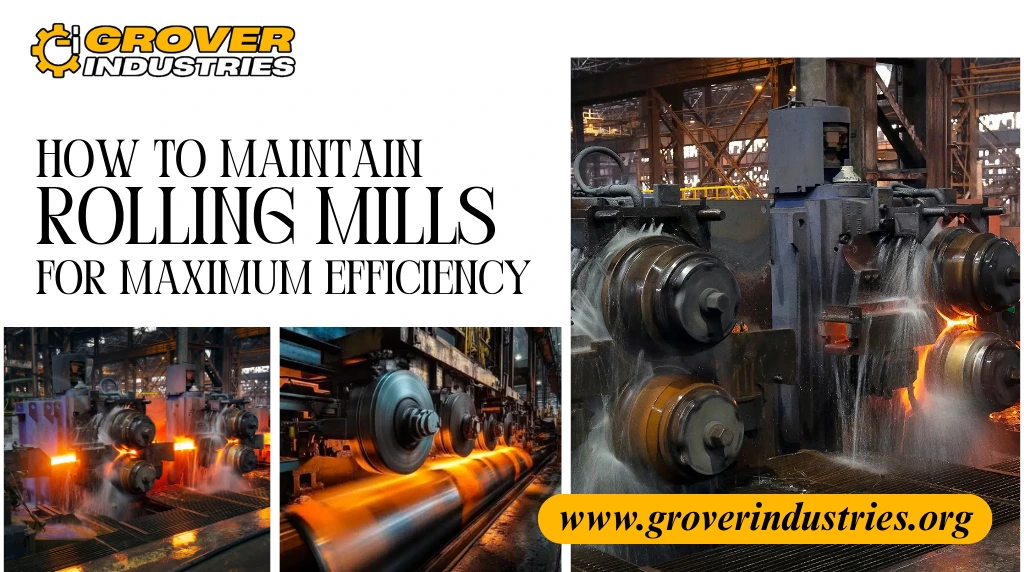
How to Maintain Rolling Mills for Maximum Efficiency
Rolling mills form the heart of metal forming and shaping industries. Whether you're producing steel sheets, rods, bars, or other metal components, the performance and uptime of your rolling mill directly impact your output quality, production cost, and overall profitability. As a trusted Rolling Mills Machinery Manufacturer and Supplier in Ghaziabad Uttar Pradesh India, Grover Industries understands that effective maintenance is not just about fixing issues — it’s about optimizing performance, preventing downtime, and extending the life of your equipment. In this blog, we’ll walk you through comprehensive maintenance strategies that help ensure your rolling mills operate at peak efficiency every day.
Grover Industries has decades of experience designing and manufacturing high-quality rolling mill systems tailored to client needs. With advanced engineering practices, precision manufacturing, and strong after-sales support, we are recognized as a reliable Rolling Mills Manufacturer and Supplier in Uttar Pradesh India offering machinery that stands the test of time.
Why Maintenance Matters for Rolling Mills:
Rolling mills are precision machines subject to extreme mechanical stresses, high temperatures, and continuous operations. Without proper maintenance:
- Component wear accelerates
- Energy efficiency drops
- Product quality deteriorates
- Unexpected breakdowns increase
- Production costs escalate
Regular maintenance ensures each component — from bearings and rollers to gearboxes and control systems — functions optimally. It also ensures safety for operators and consistent delivery of high-quality products.
1. Establish a Routine Inspection Schedule:
At the core of maintaining any rolling mill is disciplined inspection. Scheduled inspections help detect early signs of wear and potential issues before they become major problems. A good inspection routine includes:
- Daily Checks: Visual inspections for leaks, unusual noises, abnormal vibrations, and signs of overheating.
- Weekly Detailed Checks: Roller surface condition, alignment of stands, lubrication levels, and bearing health.
- Monthly Performance Reviews: Checking system parameters like roll gap, mill speed, torque levels, and surface finish quality.
Document all inspection results. Trends can indicate slow-developing issues — allowing proactive intervention rather than reactive fixes. This saves time and money in the long run.
2. Prioritize Lubrication and Cooling Systems:
Effective lubrication is essential in minimizing friction and reducing wear on moving parts. Poor lubrication accounts for a large percentage of mechanical failures. Best Practices for Lubrication:
- Use manufacturer-recommended lubricants for bearings, gears, and slideways.
- Establish a lubrication schedule based on operating hours and load intensity.
- Check lubrication systems for blockages or leaks regularly.
- Replace lubricants on a periodic basis to maintain their effectiveness.
Cooling systems also deserve special attention, especially in hot rolling environments. Keep cooling water channels, heat exchangers, and temperature sensors clean and fully operational to prevent overheating and thermal damage.
3. Maintain Rollers and Bearings for Precision:
Rollers and bearings are among the most critical components in any rolling mill. They must be maintained with precision to ensure product quality and machinery life.
Roller Maintenance Tips:
- Keep roller surfaces clean and free from debris or scale buildup.
- Inspect for surface damage such as cracks or flat spots.
- Measure roll diameters periodically; excessive wear affects metal thickness and uniformity.
Bearing Maintenance:
- Regularly check for noise and vibration.
- Ensure proper alignment — misaligned bearings drastically reduce equipment life.
- Replace bearings before they fail completely to avoid collateral damage.
When worn components are replaced promptly, you avoid hidden costs and prevent damage to other integral parts.
4. Optimize Gearbox Care and Alignment:
At Grover Industries, we build robust gearboxes as part of our rolling mill solutions, engineered for durability and smooth operation. However, even the best gearboxes need proper attention.
Gearbox Maintenance Elements:
- Monitor oil quality and levels.
- Inspect seals and gaskets for leaks.
- Check for unusual vibrations or noise, which may indicate internal wear.
- Ensure alignment with connected shafts and motors.
Precision alignment between gearboxes, motors, and rolls is crucial. Misalignment increases wear, causes inefficiency, and leads to premature failure.
5. Adopt Predictive and Preventive Maintenance Methods:
Reactive maintenance — fixing machines only after they break — is costly and disruptive. Instead, modern maintenance practices focus on predictive and preventive maintenance:
Preventive Maintenance:
- Regularly replace consumables like belts, seals, and filters.
- Conduct periodic overhauls during planned downtimes.
- Clean electrical contacts and sensor surfaces.
Predictive Maintenance:
- Use condition monitoring tools like vibration analysis and thermal scanning.
- Leverage sensor data to predict when a part might fail.
- Use real-time data to schedule maintenance before failures occur.
These methods improve reliability, extend machinery life, and significantly reduce unplanned downtime.
6. Train Operators and Maintenance Staff:
Even the best maintenance plan will fail if staff are not trained properly. Equip your team with:
- Knowledge of machine operation and safety protocols
- Skills to perform routine inspections
- Awareness of how to recognize early failure signs
- Ability to follow recommended maintenance schedules
Training increases equipment uptime and fosters ownership and accountability among operators and technicians.
7. Partner with a Trusted Manufacturer for After-Sales Support:
As a leading Rolling Mills Machinery Manufacturer and Supplier in Ghaziabad Uttar Pradesh India, Grover Industries stands behind every machine we deliver. Beyond manufacturing, we provide:
- Installation guidance
- Maintenance support
- Spare parts supply
- Technical consultation
This partnership ensures your rolling mill continues to perform efficiently throughout its lifecycle and allows you to tap into expert support whenever needed.
Conclusion:
Maintaining a rolling mill for maximum efficiency requires a blend of disciplined routine checks, well-planned lubrication and cooling strategies, precise care for rolling components and gear systems, and a proactive maintenance approach. With well-trained personnel and the support of a reliable supplier like Grover Industries, you’ll achieve consistent productivity, reduced downtime, longer equipment life, and excellent product quality.
Grover Industries, based in Ghaziabad, Uttar Pradesh, India, takes pride in being a trusted Rolling Mills Manufacturer and Supplier in Uttar Pradesh India — delivering performance-driven machinery and long-term operational support to our valued clients.
FAQs:
1. Why is regular maintenance critical for rolling mills?
Regular maintenance prevents unexpected breakdowns, extends equipment life, improves product quality, and enhances overall production efficiency.
2. How often should rolling mill components be inspected?
Daily visual checks, weekly mechanical inspections, and monthly performance reviews help identify issues early and prevent major failures.
3. What causes most rolling mill failures?
Common causes include poor lubrication, misalignment, overheating, worn bearings and rollers, and lack of preventive maintenance.
4. Can predictive maintenance reduce operational costs?
Yes — predictive maintenance uses data and condition monitoring to solve potential problems before they escalate, reducing downtime and repair costs.
5. How does proper training impact maintenance efficiency?
Trained operators and technicians can spot early signs of wear, perform effective routine checks, and ensure machines run smoothly and safely.
6. Does Grover Industries provide after-sales support for rolling mills?
Yes. Grover Industries offers technical support, maintenance assistance, spare parts supply, and expert guidance to ensure rolling mills operate efficiently.